
Field shooting support is where good range habits get tested against wind, angle, and adrenaline. This is the story of a 608-yard shot at 38 degrees from a Zodiac raft on Kodiak Island, a silver fox that got away, and the wobble zone lessons that came out of the miss.
Story by Sarah Stallone. Originally published in the Fall 2024 issue of Hunt Alaska magazine.

Kyle Waugh, a member of our 2023 peninsula moose-hunt party, takes aim at a monster bull aided by a steady tripod rest.
A Cold Wait
Ambient air temperature in the morning shadows hovered around -10º, the icy waters of the narrow bay on the south end of Kodiak Island lapped noisily against the sides of the Zodiac we had just beached. Incoming tide brought an onshore wind that cut through everything we had on.
Our hunting party took turns running the beach in attempts to thaw our toes. Once warm, unloading the raft, glassing, and repacking for a probable pursuit up a nearby mountain face were at the top of the to-do list. Breathing heavily from a warm-up run, I grid scanned the adjacent hillside, scouring it for deer. The contrast between our dark shaded side of the bay and the intensely sunny side just across from us was psychological. It looked so warm over there in the sun! “Come on deer!” I begged. “It’s cold over here!” Just then a flash of silver caught my eye. Swinging the binos in wild circles I tried to relocate my target.
We adventure on Kodiak Island for the unique challenges it presents, but also for the deer, for goats, and for bears. But during fall hunts like this, we also target the abundant population of multi-colored, heavily furred foxes that run rampant around the island. Cross- and red fox predominate, though occasionally a silver- or black fox mystically appears, and to bag a silver has been my dream ever since moving to Alaska.
There, at the peak of a conical hillside mound, sat a gorgeous black-and-silver fox, basking in the intense morning light as he sat on his haunches curiously surveying the world below. Ha! My dream comes true! I laughed internally. I tried my best to be nonchalant as I walked back to the Zodiac and pulled my frozen rifle from the cargo pile. Selfishly keeping my high-angle secret from my trigger-happy hunting party, I didn’t verbalize to the rest of the group. This fox was mine!
Wedged Between the Tubes
Kneeling next to the raft, I rested my elbows on the inflated tubes and craned my neck to capture yardage and the extreme shot angle with my rangefinder: 608 yards, 38 degrees. That would be a challenge. The angle was too steep to shoot from the side of the raft, so I quickly dove in, and pressing my body in between the port and starboard tubes, I rested the rifle on my bent knees to match the abrupt angle. Having now drawn the attention of my hunting party, they gathered around to watch the pretzeled show in amusement.
The onshore wind blew three- to five mph, the extreme angle was compensated for by DOPE, and the press-fit position felt remarkably solid. If only I could stop my body from shivering and still the pounding of my heart fluttering my crosshair at every beat, I’d be golden!
“BANG!” The rifle recoiled and I watched in utter disappointment as rock splashed just two inches below my prize, about 8 inches low of my intended target. His silver tail flashed in the sun as he swapped ends and disappeared behind the mound. Not my dream day, I lamented.
Confirmation of the low impact came from several in my hunt party; we were certain the fox was untouched. Evaluation ensued. Was the miss a DOPE issue? An ineffective shooting rest? A miscall on cant or a combo of all? I’ll never know for sure. The reward wasn’t my dream silver, but instead another moment to practice my in-field shooting skills. Though emboldened to send rounds at the predators that prey on my favorite dinner fare, I still hold their lives in high regard and wish not to discount the responsibility of my actions.
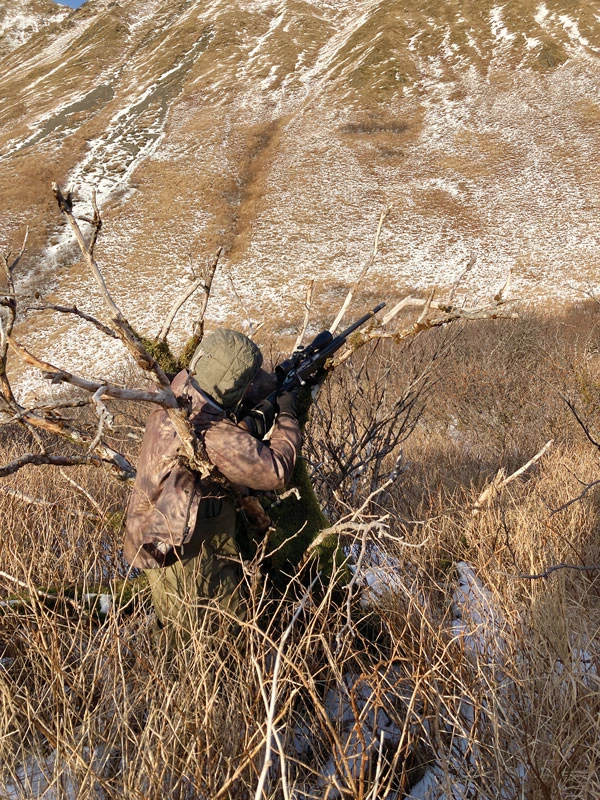
High angles and tough conditions demanded creative shooting rest ideas with varying degrees of success.
Where the Range Ends and the Field Begins
Hunters are often subjected to the most difficult demands when it comes to making shots in the field. The multi-faceted challenge is often presented under pressure with a lethal outcome as a wager rather than a sure thing. Expectations of one-shot performance and expert-level marksmanship far exceed those found in “normal” range environments. Equaling the pressure of a field scenario is nearly impossible in a range environment, however there are many things a committed marksman can do to properly prepare for field success.
We as hunters will forever ask the question, “What’s good enough?” What support position, what rifle rest, what sight picture is good enough to properly fill the freezer? Questions that should become a driver to frequent range practice and the search for realistic challenges to grow our field skills.
Bench work at the range is optimal for foundational data points: what can the rifle do; how does the ammo group; what’s the best I can shoot under perfect conditions? However, it’s off-bench work that should determine your comfort zone, effective range, and true field ability.
This adventure on Kodiak Island in 2022 offered some of the most diverse shooting positions of any hunt to date and one by one our party steadily filled the meat pole. One from a rested position atop a washed-up driftwood log, another was shot offhand, one I shot from my hunt partner’s shoulder. We employed notches in scrub alder branches and got creative with stacked backpacks. Mid-hunt, my husband, Tony, and I doubled, shooting prone, rested on our backpacks pulled sideways atop a steep ridgeline. Another deer late in the hunt presented at over 300 yards and at an extreme angle of 42 degrees. When other positions failed to meet the demands, my hunt partner tucked into a slight hollow, nearly laying on his back, rested the rifle on his backpack pulled across his body, and notched another tag.
Taming the Wobble Zone
One vital key in determining the adequacy of a rest is the art of understanding wobble zone. If the center of the crosshair “wobbles” within the boundaries of the target’s edges, a proper trigger press will send a round that will be guaranteed of an impact. A wobble zone outside the confines of the target edges relies on pure luck for an impact. Thus, a rest should be deemed appropriate based on wobble zone and risk. If an ethically harvested freezer full is desired, the rests we choose must support a wobble zone no larger than the diameter of the animal’s vital area. Sometimes for play or for practice, we accept wobble zones of larger proportions, but not on game animals.
Back to my hunting stories, I found myself frustrated by the inadequacies of cobbled field support systems. For resolution I turned to years of knowledge gained from my time in competitive shooting sports and consistent use of a tripod for a fast and reliable shooting position. In subsequent hunts, quickly deploying a lightweight tripod and spending an extra moment to build a strong kneeling foundation has allowed the harvest of several trophies, both for myself and for those in my hunt party. Though originally used for just the spotting scope, I now use the tripod for everything from glassing to shooting, and the stability this simple tool provides has been unprecedented. Formerly scoffed at, I now find its support invaluable and quickly set it up for anyone who’s willing to give it a try.
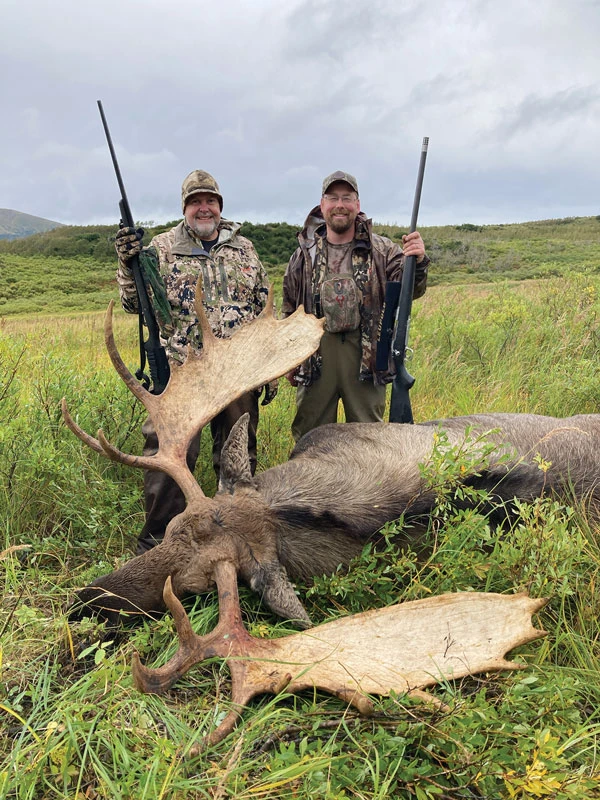
Kyle and Sterling stand next to Kyle’s once-in-a-lifetime trophy.
Want to build these skills with hands-on instruction? View our wide range of Accurate Advantage Courses.
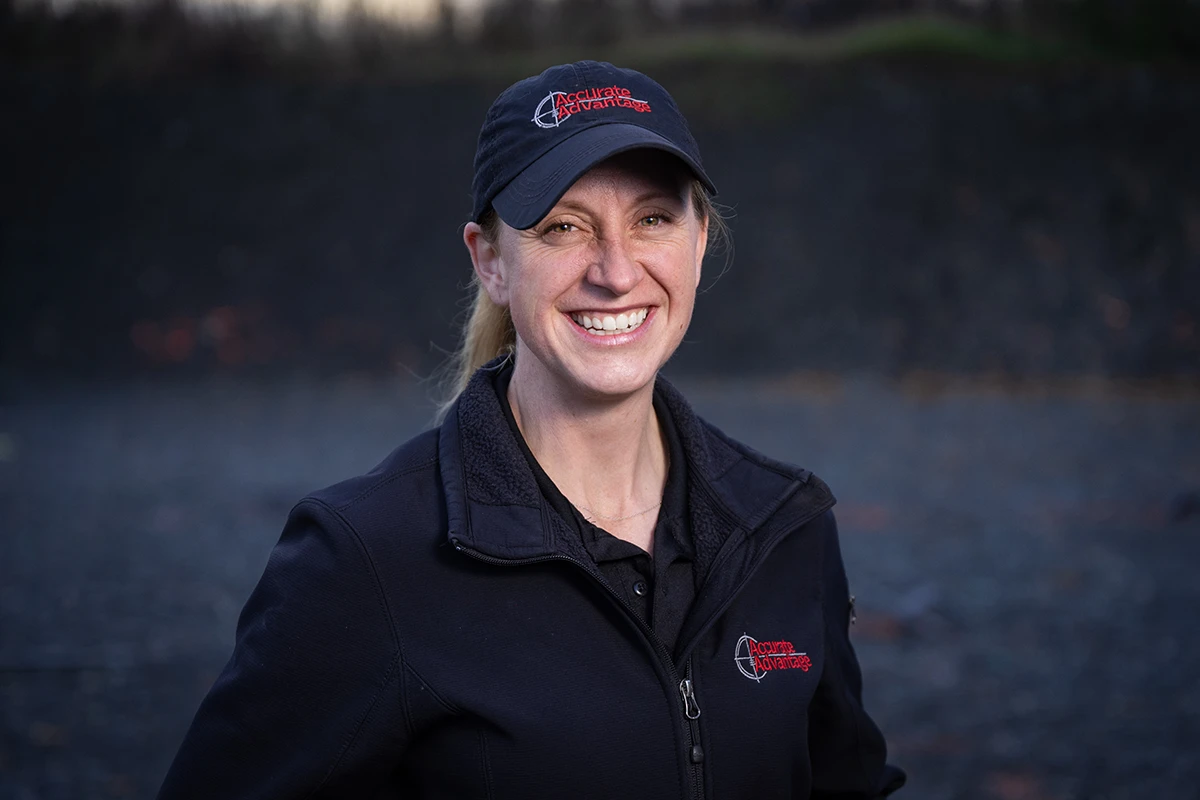
Sarah Stallone
About the Author
Sarah Stallone is an outdoor writer and contributor to Hunt Alaska magazine, firearms instructor, and Territory Manager for Leupold Optics with more than 30 years of experience in the field and on the range. As founder of Accurate Advantage, she teaches everything from home defense and bear safety to precision rifle, where she also competes at the national level. A wife and mom based in Alaska, Sarah finds her best material spending time in the wilderness with friends and family.