
Better See Your Bullet Impacts
How to better see bullet impacts while hunting can be the difference between a clean recovery and days of doubt in the field. Rifle instructor Sarah Stallone has spent 21 years teaching hunters exactly how to get there.
Story by Sarah Stallone. Originally published in the Summer 2025 issue of Hunt Alaska magazine.
The inspiration for this article hit during a December goat hunt on the south end of Kodiak Island, known for its vicious and unpredictable weather. We wager these odds for the prospect of long-haired winter goat hides, and the opportunity for adventure during a slower work season. During an iconic 60 mph windstorm, we hiked a few extra miles to take refuge in a small Forest Service cabin primarily used for hunting. For entertainment we read aloud the cabin log and therein hundreds of entries. A recurring theme caught my attention. Across a dozen or more of these narratives, I identified the deep frustration of the unknown hit or miss on game.
A Cabin Log Full of Hard Lessons
In one account, a special family moment happened when a mom, balanced over a tundra hummock, took a shot at her first big-game animal. Her husband, standing nearby holding their young son, described it as a “nice Sitka buck.” Unsure if it was a good hit and unable to find the deer before dark, the discouraged family returned the following day for a broader search. Through hours of hard work and with a little luck they located the downed deer and rejoiced in the well-earned first.
In another story, having waited a lifetime to draw the coveted tag, a hunter expertly stalked his dream—a trophy Kodiak brown bear—and took a 250-yard shot. But unable to ascertain if it had impacted, a wishful walk up turned into days lost to the search for blood or evidence of a hit. It was hard not to feel the heartbreak in his telling of responsibly notching his tag and flying out empty-handed.
To that responsible bear hunter and to the persistent family, I applaud you. To both, I give respect. Because of these and the other written instances, I was impressed freshly with the felt responsibility of helping shooters learn the geometry of recoil recovery. The cabin log moved me to share from pointers learned in the progression of my professional hunting and shooting careers, with the hope that I can spare you the uncertainty, replacing it with confidence and assurance of the impact. You must strive to see your impacts.
The Science
Body positioning cannot fully mitigate the effect of recoil. Positioning CAN, however, direct inertia. Just as you visually aimed your shot, so also your body position “aims” your recovery during and after recoil. The intentional alignment of your center mass in relationship to the rifle and the recoil impulse can direct the jump and allow gravity to set you back down with a target visual.
The Progression
Many of you learned, as I did, bladed shooting positions which, by pure geometry, minimized felt recoil by redirecting it in wild arcs off target. The nature of a bladed angle combined with felt recoil is that of weakness; structure points meant to collapse to bleed off energy. But the result is that you probably won’t be looking at the target after recoil.
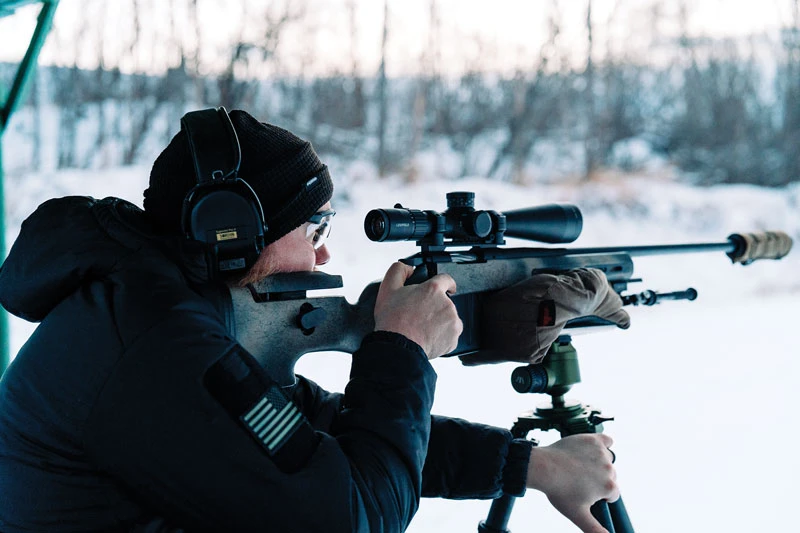
Modern calibers and recoil reducers allow a more inboard stock placement limiting the angles between the shooter and rifle. © Rob Roy
The Goal
Gathering data on every trigger press should be the goal of the progressive shooter. It is information that’s most complete if the shooter can compare what they feel with what they see by way of recoil direction, bullet trace, and with practice, also the impact of the bullet.
The Position
A modern prone shooting position squares the shooter’s shoulders to the target and aligns the shooter’s body as seen in figure 1. The rifle, the shooter’s strong-side hip pocket, and heel create one continuous line. Buttstocks are being positioned more inboard (toward the sternum) than previously suggested by traditional “shoulder pocket” instruction, reducing the angle at which the shooter addresses the rifle. It’s of note that modern shooting positions are made possible by lighter calibers and contemporary bullet design dishing more energy for less recoil. A vast array of muzzle devices designed to redirect a significant percentage of the recoil have become common. The bladed shooting positions were and still are occasionally employed for large calibers or rifles void of these features.
The most valuable information will come from shooting multiple rounds through a rifle firmly held and supported from two points of contact such as a front tripod and rear backpack, or sitting, with a tripod front support and the shooter’s knees supporting the elbows and rear stock. One can get creative outside the standard prone position.
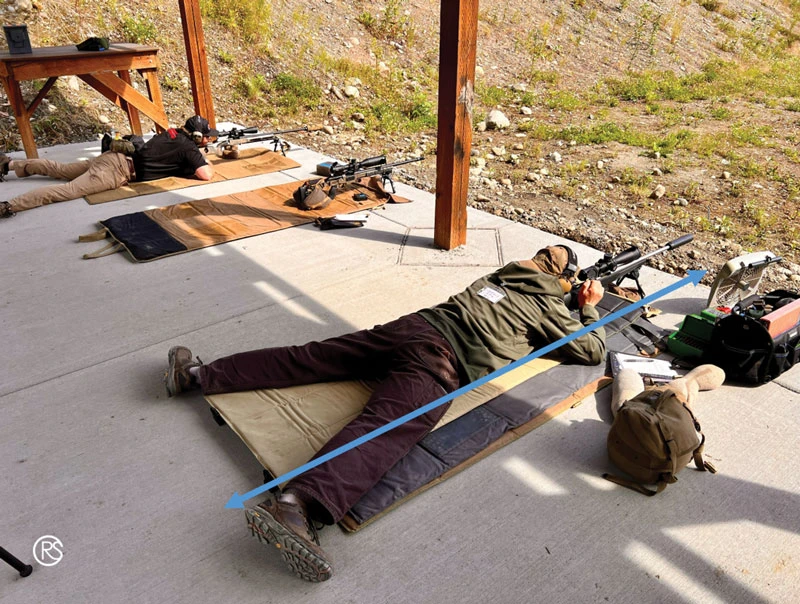
Figure 1: A proper shooting position will be squared to the target creating one continuous line from the gun through the shooter’s aligned body. © Carl Smith
Avoid the Wilson Effect
With the proper alignment described above, the shooter will settle, post recoil, with a visual of the target IF they avoid falling victim to the “Wilson Effect,” a habit I affectionately named in resemblance to the neighbor from Home Improvement who constantly pops above the fence for a nosey check in. For 21 years I’ve watched shooters and hunters take full advantage of their optic’s magnified target view up to the very point of pressing the trigger, after which their head immediately pops above the optic reducing magnified data collection to whatever bare eyeballs can detect—very limited information at best for shots at any distance.
Requirements
Keeping your face on the gun and your eye in the optic is imperative. Also necessary is the ability to stay on the rifle controls, following through the shot, maintaining trigger-finger connection through recoil. In the search for a view of your impact, you will become more mindful of rifle fit and butt-pad shoulder placement.
Light rifles absorb less recoil energy, transferring the lion’s share to the shooter’s shoulder. Based on rifle weight, shape, or choice of caliber, this can be a rodeo. If you’re finding it difficult to stay connected to your rifle, finding it impossible to watch the impact, or simply wanting to build your shooting fundamentals to their greatest potential, you’ll start first with a lighter caliber, or a heavier gun. With time and practice, you can progressively build into the skillset of controlling muzzle jump for any rifle.
A centerfire bullet’s Time of Flight (TOF) to a close-range target is short. For training purposes, practice is most rewarded when shots longer than 200 yards are taken. For closer range data gathering, reduce your magnification to increase your field of view, and pay more attention to where the reticle ends up after recoil, less on visible trace, or bullet splash.
The Application
Assuming you are relatively square to the target and not bladed, if the crosshair settles right of target, then move your center mass right in increments of an inch or two. This can be your seat on a shooting bench, your hips in prone, or your knees or feet from a supported standing or kneeling position. In this way the shooter can “aim” recoil recovery. With time, not only does a shooter learn to automatically read recoil, but once mastered, focus is freed up for more intricate details like bullet trace, impact splash, or the indicators of how to correct for complex variables like wind or range estimation.
With repetition, a shooter will automatically identify nuances that “feel square,” confirmed by impact visuals and will quickly build confidence for the instances when sending do-overs isn’t an option, such as in hunting or in competition.
Years before learning these principles, I too shared the frustration of the unknown impact. I wasted a lot of time questioning shots and tracking animals that I wish I could now have back. I easily commiserate with the accounts written in the cabin log on Kodiak Island. As a testament to the incredible instructors in my life, growth has led to a memory bank full of successful hunts confirmed by impact visuals, moments of the hunt that have become the most rewarding to me.
The value of a proper shooting position behind the gun can pay in dividends in the field and on the range—a skill I encourage every shooter to master.
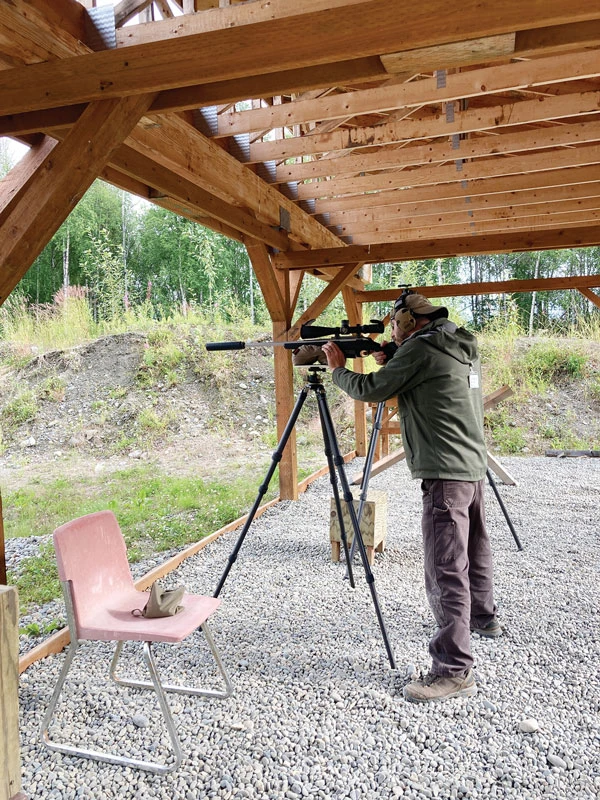
Proper body alignment allows the shooter to read recoil from a variety of positions. © Sarah Stallone
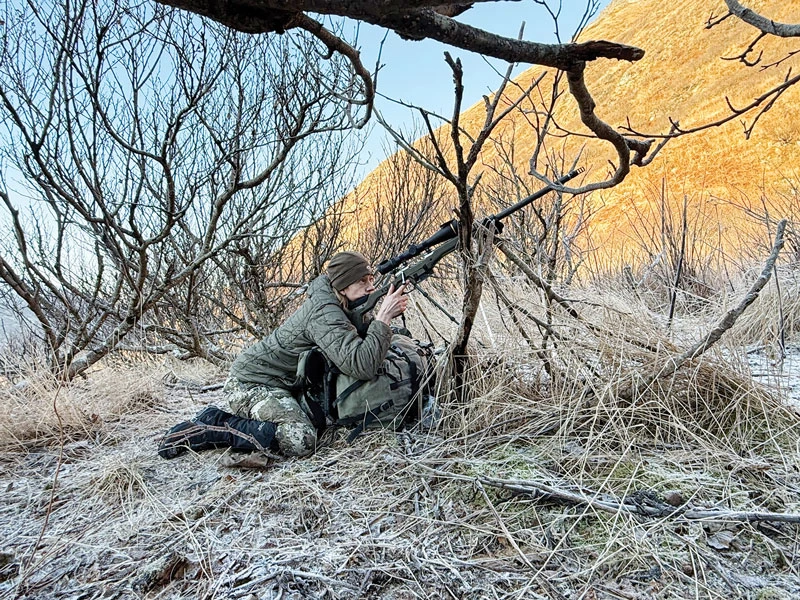
Proper body positioning can direct inertia, essentially “aiming” your recovery after recoil to gift the shooter a visual of the impact. © Sterling Cook
Want to build these skills with hands-on instruction? View our wide range of Accurate Advantage Courses.
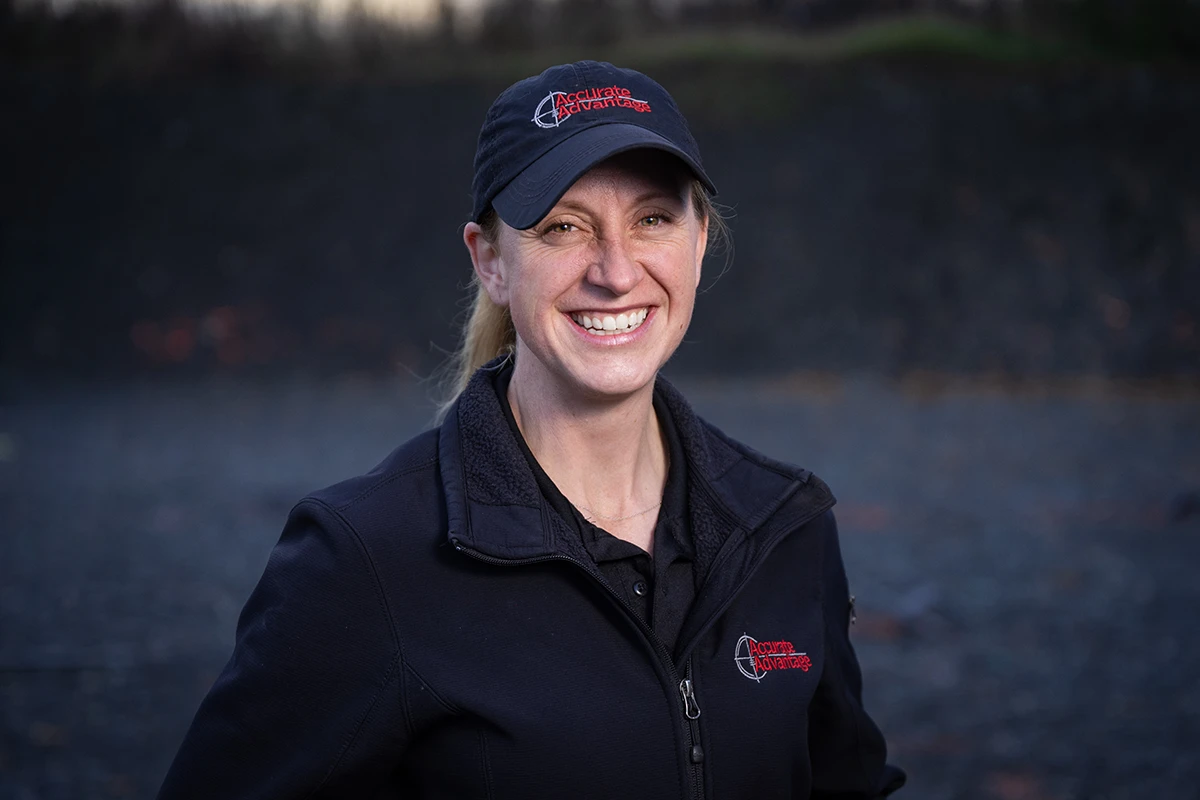
Sarah Stallone
About the Author
Sarah Stallone is an outdoor writer and contributor to Hunt Alaska magazine, firearms instructor, and Territory Manager for Leupold Optics with more than 30 years of experience in the field and on the range. As founder of Accurate Advantage, she teaches everything from home defense and bear safety to precision rifle, where she also competes at the national level. A wife and mom based in Alaska, Sarah finds her best material spending time in the wilderness with friends and family.